


NNSX
Penis Sleeve with Spiral Ribbed Structure & Vacuum Seal Zone – Biomechanical Phallus Sheath in Nebula Violet
Penis Sleeve with Spiral Ribbed Structure & Vacuum Seal Zone – Biomechanical Phallus Sheath in Nebula Violet
Couldn't load pickup availability
Penis Sleeve with Spiral-Rib Structure & Vacuum Seal Zone – Biomechanical Phallus Sheath in Nebula Violet
The Problem: Every sleeve slips under lubricant. The base loses grip, the texture loses effect, the experience loses intensity.
The Solution: This penis sleeve has a deep-groove base with vertical high-pressure channels that provide not less, but more grip under lubricant.
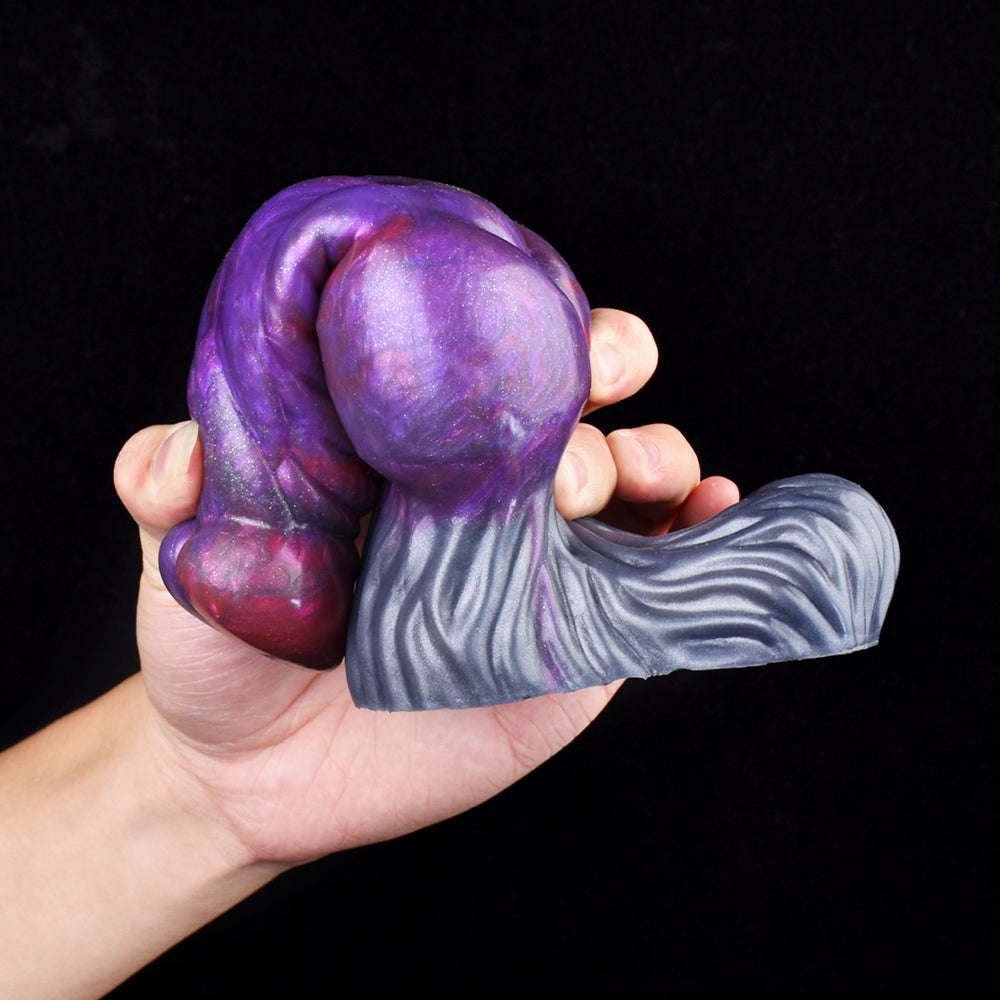
The Proof: Image 5. Grasp the base. Feel the grooves. That's not just decoration.

Biomechanical Phallus Sheath & Penis Sleeve: Spiral-Rib Structure in Three Functional Zones
The biomechanical phallus sheath is divided into three zones that function independently. Zone 1 – Tip: non-human head shape with smooth flanks – minimal insertion resistance, maximum penetration depth. Zone 2 – Shaft: 10 to 12 densely placed spiral-rib rings made of platinum silicone – each ring a separate pressure point, the torsion of the spiral creates a rotating friction component upon insertion. Zone 3 – Nodal Expansion: a single spherical bulge that interrupts the rib rhythm and provides a defined stretching impulse. Three zones. No repetition.

Vacuum Seal Zone: Why Lubricant Enhances Fixation Instead of Weakening It
The deep-groove base with a zebra-wave structure solves a problem that no smooth base ring can. The vertical high-pressure channels of the vacuum seal zone function like sealing lips: when applied to the root skin, microscopic negative pressure zones are created between the grooves – the more lubricant, the stronger the sealing effect. The double-suction cup ring enhances this effect with two independent fixation points. The result: no slipping, no readjusting, no interruption.

Nebula Violet & Zebra Wave Structure: Two Material Worlds, One Object
The shaft glows in Nebula Violet: deep violet, crimson red, and pearlescent silver cast simultaneously – each piece a different flow pattern. The base contrasts in matte blue-gray with parallel zebra-wave lines – matte, grounded, thermally cool compared to the luminous shaft. Both areas are made from the same platinum silicone, but with completely different pigmentations and surface geometries. The object looks as if two materials have been joined. They have not.

Frequently Asked Questions
How exactly does the vacuum seal zone work with lubricant?
The vertical deep grooves of the base adhere to the skin upon application, trapping air chambers between the grooves. Lubricant fills these chambers, enhancing the negative pressure effect – similar to a sealing lip that becomes firmer under pressure. This effect is strongest during dynamic movement: the more movement, the more stable the seal.
What makes the spiral-rib structure different from straight ribs?
Straight ribs create linear friction – uniform, predictable. This geometry runs in a torsion: upon insertion and withdrawal, a rotating friction component is created that fundamentally differs from linear stimulation. The partner feels not only pressure – but direction.
Is this sleeve also suitable for larger circumferences?
Yes. The platinum silicone stretches to many times its resting state without flattening the rib structure. The nodal expansion is designed for couples with experience with textured extenders – the stretching impulse is clearly noticeable.
How do I clean the deep-groove base?
Rinse warm water through the grooves under pressure – the channels are accessible from the outside. Use mild soap, dry completely. The platinum silicone is non-porous. Do not use alcohol-based disinfectants.
Is the Nebula pattern identical in every piece?
No. The simultaneous casting of violet, crimson red, and pearlescent silver creates a different flow distribution in each piece. The basic colors are constant – their flow is not.


Latest Sex Toys from SilikonLust
-
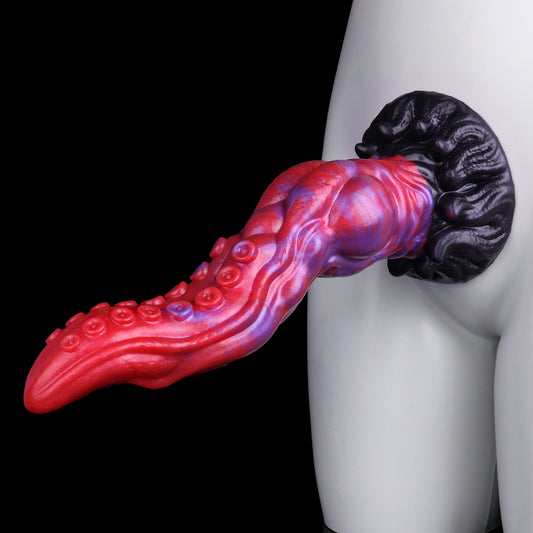
Tentacle Creature Fantasy Dildo - Dual Suction Cup Row Tentacle, Red-Violet-Blue Violet Pearlescent Swirl, Spherical Expansion Zone & Black Organic Tentacle Wreath Suction Cup Base made of Platinum Silicone
Regular price €116,20 EURRegular price -
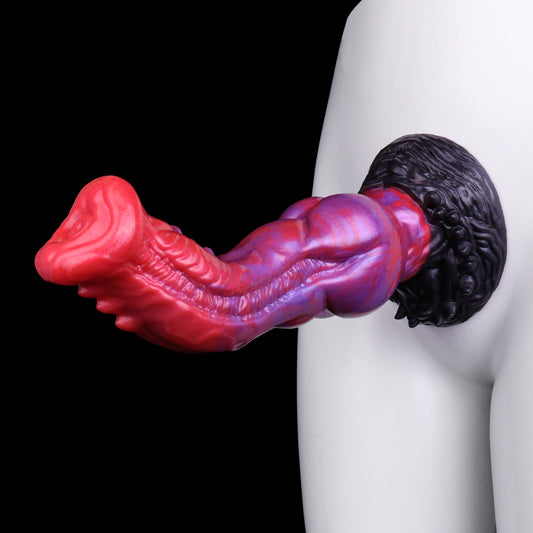
Beast Mouth Dog Dildo - Funnel Rosette Glans, Bilateral Triangular Spike Rows, Double S-Curve Shaft, Ball Expansion Zone & Black Organic Tooth Suction Cup Base Made of Platinum Silicone
Regular price €114,40 EURRegular price -
Scarlet Spiral Dog Dildo – Conical Double-Lip Glans, Beaded Corona Ridge, Screw-Grooved Shaft, Single-Knot Knot Ball & Black Scaled Scrotum Suction Cup Base in Platinum Silicone
Regular price €128,80 EURRegular price -
Dragonpulse Dog Dildo - Radial Blossom Glans, Coarsely Irregular Vein Relief, Dual-Knot Shaft & Black Dragon Scale Testicle Suction Cup Base Made of Platinum Silicone
Regular price €124,60 EURRegular price




Featured SilikonLust Series
-

Buy Squirting Dildo – Cumming Dildo & Squirting Dildo made of Platinum Silicone
Squirting Dildo – When the Moment Is Right A squirting dildo from...
-

Penis sleeve
Platinum Silicone Penis Sleeves – the grip that cheap sleeves never had....


